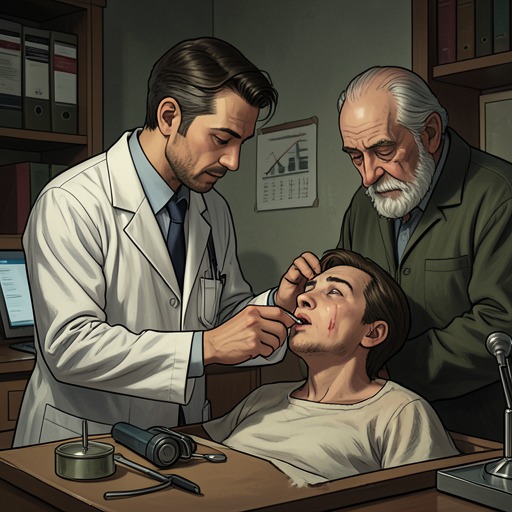
Limuelle and Hohsalle Cure the Zol Empress
The Deer KingLimuelle and Hohsalle Cure the Zol Empress marks a turning point in the conflict between Otawalle medicine and Zol’s religious authorities. When Emperor Natalu’s wife fell gravely ill, the physicians treated her despite fierce opposition, and she recovered completely. Their success offered a choice beyond the accepted practice of surrendering incurable patients to divine will, but it also brought Otawalle medicine under suspicion and intensified a dispute that remained unsettled a decade later.
The crisis and the cure
Natalu was a decisive ruler, but his wife’s mortal illness tested the limits imposed by the religious establishment. Zolian priest-doctors, who served the Pure Heart Creed, regarded medicine as a matter of divine teaching. Physicians were revered as “the fingers of the god,” and when they declared an illness incurable, the customary response was to leave the patient in the god’s hands and give only medicines intended to ease the process of dying.
Natalu refused to accept that verdict for his beloved wife. He had heard that Limuelle and Hohsalle had saved others suffering from the same disease, and summoned them to treat her despite advisers’ objections that Otawalle remedies were heretical. The two physicians cured her completely. The account presents that outcome plainly: what the established doctors had treated as a matter for religious resignation proved responsive to a medical practice their authorities rejected.
A private recovery becomes a public dispute
Impressed by the physicians’ skill and knowledge, Natalu asked Limuelle and Hohsalle to remain at the palace as physicians and teach the priest-doctors what he regarded as Otawalle’s superior medical science. The proposal would have brought the rival practice into the heart of the court. The palace doctors reacted with fury, and the disagreement escalated into a clash between the association of priest-doctors and the emperor.
The immediate confrontation eased only after Limuelle and Hohsalle announced that they would decline the offer. Their refusal ended the possibility of a palace appointment, but not the consequences of their treatment: word of the cure spread through the empire and alerted the Zolian aristocracy to the possibilities of Otawalle medicine. The empress’s recovery thus became more than a personal success; it made a suppressed alternative visible to people with the means to seek it.
The cure’s consequences
Nobles whose conditions had been pronounced incurable began covertly consulting Otawalle physicians. Their choice followed the stark contrast exposed by the empress’s case: where the priest-doctors prescribed acceptance of an incurable diagnosis, Otawalle physicians appeared to offer a chance of healing. The association of priest-doctors was incensed and warned the nobility that abandoning the true path would bring ruin to the empire.
That warning carried political force because the Pure Heart Creed was described as the fabric binding the sprawling empire together. Neither Natalu nor the aristocracy could openly oppose the priest-doctors without confronting that religious structure. As a result, the empress’s cure did not replace the prevailing doctrine. Even ten years after her recovery, Otawalle medicine remained officially branded as heresy, while nobles continued to seek it in secret.
Competing accounts of healing
The dispute is not simply between one set of treatments and another: the two traditions differ over what medicine is for and what counts as necessary knowledge. The Pure Heart Creed’s priest-doctors locate medical authority within divine teaching and accept that some conditions should be left to divine will. Limuelle and Hohsalle’s work instead demonstrates that an illness deemed fatal may still be treated. The cure’s significance lies in the knowledge it makes practical: a patient need not be regarded only as someone whose death should be eased.
Later explanations of disease develop this contrast without making the original cure a complete victory. Hohsalle describes examining bodies marked by dog bites and a widespread rash, and explains that Black Wolf Fever can be carried by wolves, wild mountain dogs called ossam, and, more dangerously, fleas or ticks that have bitten infected animals or people. His medical account attends to physical signs and routes of transmission, rather than treating disease only as a question of divine judgment.
The same approach looks for ways to prevent or resist illness. Hohsalle explains that bodies contain different kinds of defensive “soldiers,” and that a weakened disease agent can train them to recognize a particular illness. He credits Limuelle with discovering why people sometimes contract a disease only once and devising a way to introduce weakened agents into the body. In a separate explanation of research possibilities, the dead are described as potential sources of disease agents, substances that might suppress illness, and antibodies that could inform a serum. These later accounts show the larger medical world associated with the physicians, while the empress’s case remains its decisive demonstration to Zol: a forbidden treatment had worked.
An unresolved legacy
The cure changed what the empire’s nobles believed was possible, but it did not dissolve the authority that determined what could be practiced openly. Natalu’s trust in Limuelle and Hohsalle was grounded in the recovery of his wife; the priest-doctors’ opposition rested on a religious order that joined medical practice to the unity of the state. The physicians’ decision to decline the palace post defused the immediate confrontation, yet their success had already set private demand against official condemnation.
That tension persists in the account of Mana, a priest-doctor of the Pure Heart Creed. Offered the chance to see the tiny organisms Hohsalle identified as causes of disease, Mana declined, arguing that careful observation of patients and the obstacles affecting their lives mattered more to his practice than identifying each organism. His position makes the divide more complex than simple disbelief: he sees disease through a different explanatory and ethical framework. Against that framework, Limuelle and Hohsalle’s cure stands as both a medical achievement and a challenge to the assumption that a religiously authorized diagnosis should decide when hope must end.